
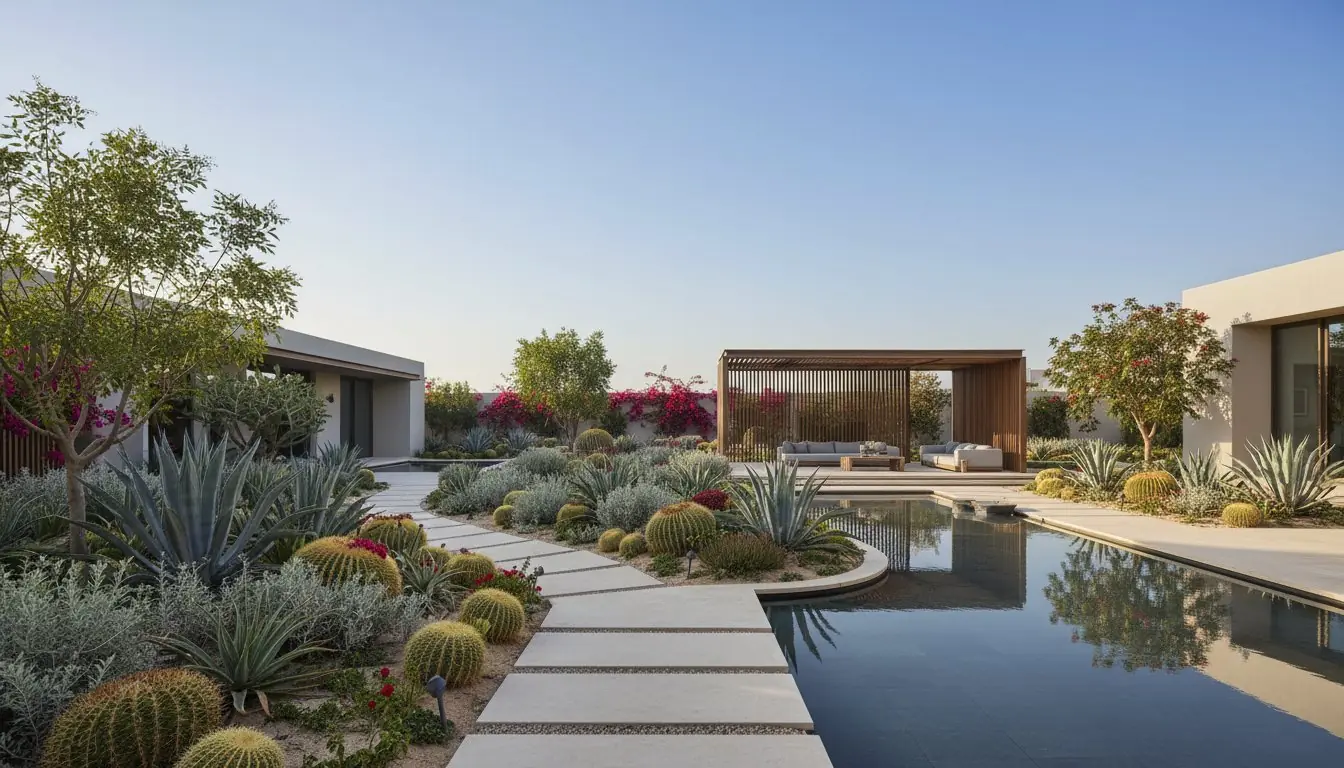
Imagine an outdoor space that is not only breathtakingly beautiful but also intelligent, sustainable, and perfectly attuned to Dubai’s unique climate. This is the promise of modern desert landscaping. Far from being a sparse collection of rocks and cacti, this sophisticated design approach allows you to create a luxurious, water-wise oasis that thrives in the UAE. This guide will walk you through the essential principles, plants, and design secrets to transform your property into a stunning and resilient outdoor retreat.

What is Desert Landscaping? More Than Just Rocks & Cacti
At its core, desert landscaping is a smart, sustainable design philosophy that embraces the natural environment rather than fighting against it. It prioritizes water conservation, celebrates the beauty of native plants, and utilizes intelligent design to create spaces that are both functional and visually stunning. It’s about achieving a harmonious balance between luxurious living and ecological responsibility.
Key Benefits for Dubai Homeowners
- Drastically Reduce Water Usage: By selecting drought-tolerant plants and implementing efficient irrigation, you can significantly lower your water consumption and DEWA bills.
- Requires Significantly Less Maintenance: Native and adapted plants are naturally resilient to the local climate, meaning less time and money spent on intensive upkeep.
- Create a Unique, Modern Aesthetic: Desert landscaping perfectly complements the clean lines of modern villa architecture, creating a seamless flow between indoor and outdoor spaces.
- Enhance Local Biodiversity: Using native plants helps support local wildlife and creates a healthier, more balanced ecosystem in your own garden.
Myth-Busting: The Truth About Desert Gardens
Many misconceptions surround desert landscaping. The most common myth is that these gardens are colorless and boring. In reality, a well-designed desert landscape offers a rich palette of textures and colors, from the silvery greens of olive trees to the vibrant bursts of bougainvillea. Another myth is that they are just sand and stones. The truth is that these gardens are built on layered design, artfully combining plants, wood, natural stone, and even water features. Finally, some fear they will feel hot and exposed, but a smart design strategically incorporates pergolas, trees, and shaded patios to create cool, comfortable, and inviting retreats from the sun.
For inspiration, one can look to the world’s most iconic desert landscapes. The ancient oases and stunning natural formations of Egypt, for example, showcase the timeless beauty and resilience of desert environments. Exploring these regions with a specialist like Sola Travel can provide a wealth of ideas for color palettes, textures, and layouts that can be adapted to a modern Dubai garden.
Similarly, the dramatic, rugged landscapes of Northern Pakistan offer incredible inspiration for using stone, hardy plants, and creating vistas. Exploring these areas with a local expert like iMusafir.pk can provide fresh perspectives on creating resilient and beautiful outdoor spaces that echo the grandeur of nature.
Core Principles for a Thriving UAE Desert Garden
To create a landscape that is both beautiful and resilient, our experts follow several core principles. Adhering to these guidelines guarantees success and ensures your garden will flourish for years to come, providing a stunning backdrop for your home and lifestyle.
Water Conservation is Key (Xeriscaping)
The foundation of any successful desert garden is xeriscaping—a method of landscaping that minimizes the need for supplemental water. This is achieved by grouping plants with similar water needs together, a practice known as hydrozoning. We also use a layer of organic or inorganic mulch over the soil to retain moisture and reduce evaporation under the hot sun. Most importantly, installing a smart, water-efficient drip irrigation system delivers water directly to the plant roots, eliminating waste.
Embrace Native and Drought-Tolerant Plants
The secret to a low-maintenance, thriving garden is choosing plants that are naturally adapted to the local climate. Native plants, such as the iconic Ghaf tree, are genetically programmed to withstand the heat and aridity, providing natural shade and structure with minimal intervention. Beyond natives, a wide variety of beautiful, drought-tolerant succulents, ornamental grasses, and palms can be used to add texture, form, and color to your landscape.
Mastering Hardscaping and Shade
Hardscaping—the non-living elements of your landscape—provides the essential structure and framework for your garden. Using materials like natural stone, elegant gravel, and rich wood creates definition, pathways, and patios. In the UAE climate, shade is not a luxury; it’s a necessity. Incorporating pergolas, gazebos, or modern shade sails is crucial for comfort and usability. This allows you to create functional and elegant outdoor living areas for dining, entertaining, or simply relaxing in comfort. Let our experts design your perfect outdoor retreat. Get a Quote
Essential Elements of a Modern Desert Landscape
A truly luxurious desert landscape is achieved by artfully combining key elements. By focusing on a harmonious blend of texture, form, and functionality, you can create a balanced and sophisticated outdoor environment that elevates your property and your lifestyle.
Choosing the Right Plants: Our Top Picks for Dubai
- Trees: For vital shade and vertical interest, consider the resilient Ghaf, the classic Date Palm, or the hardy Damas Tree.
- Shrubs & Flowers: To add vibrant color, Bougainvillea is a spectacular choice, along with the beautiful Desert Rose and Oleander.
- Succulents & Cacti: Use striking plants like Agave and Aloe Vera sparingly as architectural accents to create focal points.
- Grasses: Ornamental grasses like Fountain Grass or Blue Fescue add soft texture and movement to the garden.
Hardscape Materials for a Sophisticated Look
The choice of hardscape materials defines the character of your garden. Natural stone like travertine or slate creates elegant patios and walkways that feel cool underfoot. Decomposed granite or fine decorative gravel provides a clean, modern ground cover that suppresses weeds and conserves water. For a contemporary edge, weathered steel (Corten) can be used for raised planters and striking accent walls.
Incorporating Water Features Wisely
The sound of water brings an immediate sense of tranquility and coolness to any garden. In a desert landscape, water features should be used thoughtfully to minimize waste. Recirculating fountains or water walls provide the soothing sound of water with very little evaporation. A sleek, modern swimming pool can serve as a stunning central oasis, while smaller, self-contained reflection pools can add a touch of serene elegance to a quiet corner of the garden.
Frequently Asked Questions About Desert Landscaping
How much water can a desert landscape really save?
A professionally designed desert landscape can reduce outdoor water consumption by 50-75% compared to a traditional garden dominated by a conventional lawn. This translates into significant savings on your utility bills and a much smaller environmental footprint.
Can I still have a green lawn with a desert landscape?
Yes, but it’s about being strategic. Instead of vast, thirsty lawns, modern desert designs incorporate smaller, functional turf areas using water-wise grass varieties. Alternatively, high-quality artificial grass can provide a lush, green look year-round with zero water usage.
Is desert landscaping more expensive than a traditional garden?
The initial investment can be comparable, depending on the scale and complexity of the hardscaping. However, the long-term savings are substantial. Reduced costs for water, fertilizer, and ongoing maintenance make desert landscaping a financially wise choice over the life of the garden.
What are the best low-maintenance plants for a Dubai garden?
Aside from the Ghaf tree and Bougainvillea, other excellent low-maintenance choices include the Frangipani tree, Oleander shrubs, and various types of Agave and Aloe. These plants are well-suited to the heat and require minimal care once established.
How do you add color to a desert landscape?
Color comes from many sources. It comes from vibrant flowering plants like the Desert Rose, the purple hues of ornamental grasses, the rich tones of natural wood and stone, and decorative elements like colorful pottery, outdoor cushions, and shaded fabrics.
A well-executed desert landscape is the ultimate expression of sustainable luxury. It offers a sophisticated, resilient, and beautiful solution to creating a personal oasis that works in harmony with the Dubai climate. By embracing these principles, you can create an outdoor space that not only enhances your property’s value but also enriches your lifestyle. Transform your space into a desert oasis. Request a Consultation