Tropical planting can bring a genuine sense of luxury to a Dubai villa, but not every plant that looks tropical is built to survive outdoors in this climate. A common mistake in garden planning is choosing Tropical Plants Dubai homeowners have seen online for their appearance alone, without considering whether they can actually tolerate direct Gulf sun, low humidity, and long summer heat.
Which Tropical Plants Dubai Gardens Actually Suit
Some of the most popular “tropical look” plants — including ginger and many broad-leafed tropical foliage varieties, along with palms like Areca that are often marketed for outdoor use — are, in reality, indoor or heavily shaded courtyard plants. Planted in an exposed villa garden under full UAE sun, they scorch, dry out, and rarely thrive no matter how well they are irrigated.
A well-designed Tropical Plants Dubai garden works with the climate rather than against it, choosing genuinely heat- and drought-tolerant species for open, sun-exposed areas and reserving the softer, more delicate tropical foliage for shaded courtyards, covered patios, and indoor spaces where it belongs.
Genuinely Outdoor-Hardy Tropical Plants Dubai Villas Can Rely On
For outdoor villa gardens, Bougainvillea remains one of the most reliable choices in the UAE. It handles full sun and heat with ease, needs comparatively little water once established, and rewards a garden with strong, vivid colour along walls, fences, pergolas, and boundary screens.
Plumeria is another genuinely outdoor-hardy option, particularly once mature — its fragrant flowers and architectural branch structure make it an excellent feature tree for an entrance or a framed seating area, and it tolerates Dubai’s summer far better than most plants that share its tropical reputation. Hibiscus, planted with consistent irrigation, also performs well outdoors here and adds vibrant flower colour that contrasts nicely against green foliage.
Where Shade-Loving Tropical Plants Dubai Gardens Still Have a Place
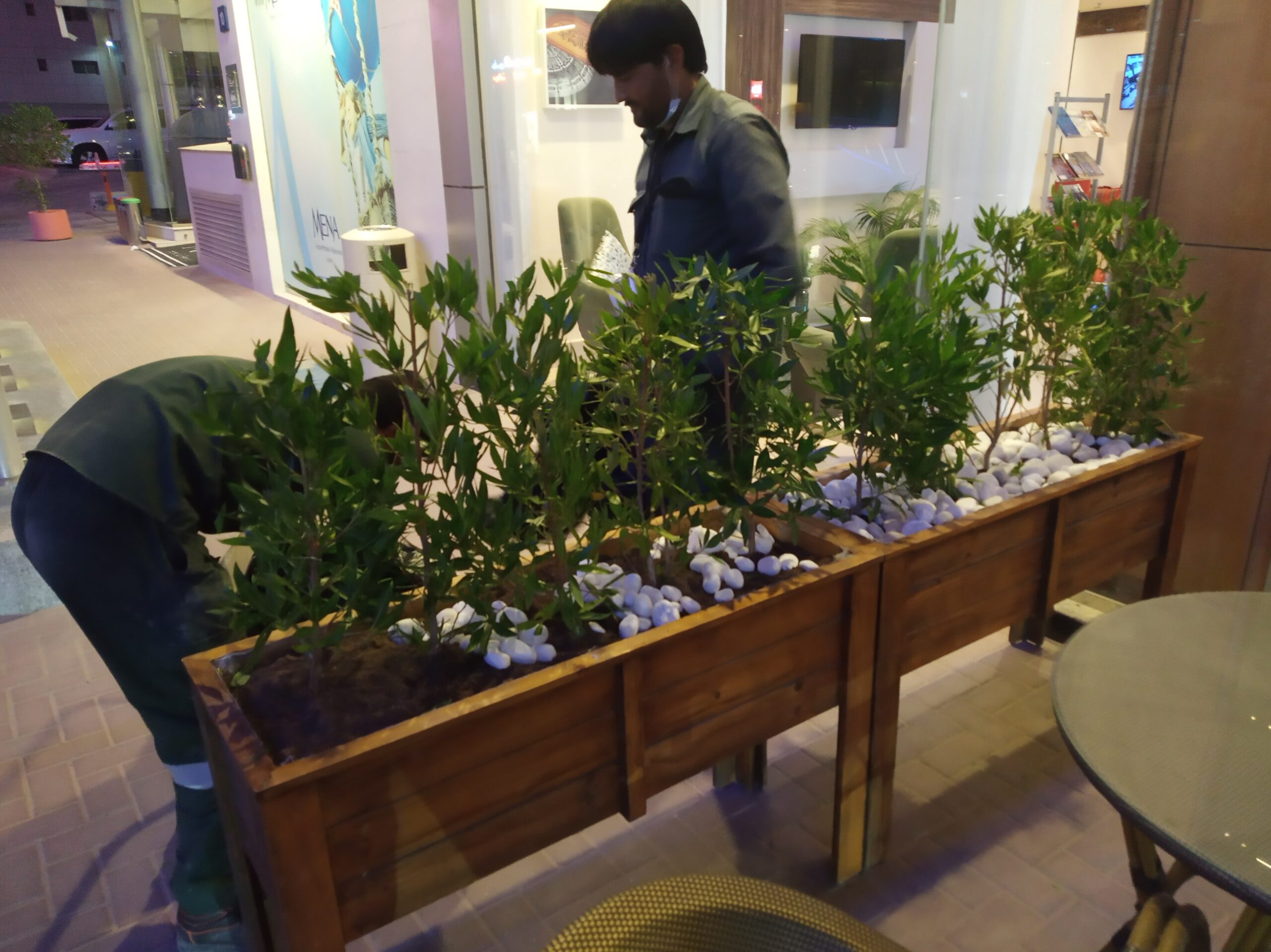
Plants such as Areca Palm, Bird of Paradise, and Pandanus are better treated as accent plants for partially shaded, sheltered spots — a courtyard wall that only gets morning sun, a covered pergola corner, or an entrance alcove shielded from the harshest afternoon exposure — rather than open, fully exposed villa gardens.
Used this way, they still contribute the lush, layered look that makes a tropical design feel resort-like, without the constant stress and replacement cost of fighting the climate. Ginger and other soft, broad-leafed tropical foliage plants are best kept indoors or in a heavily shaded, humidity-retaining courtyard altogether; they are not a realistic choice for open outdoor planting in Dubai and should not be recommended as one.
Designing a Tropical Plants Dubai Layout Around the Right Species
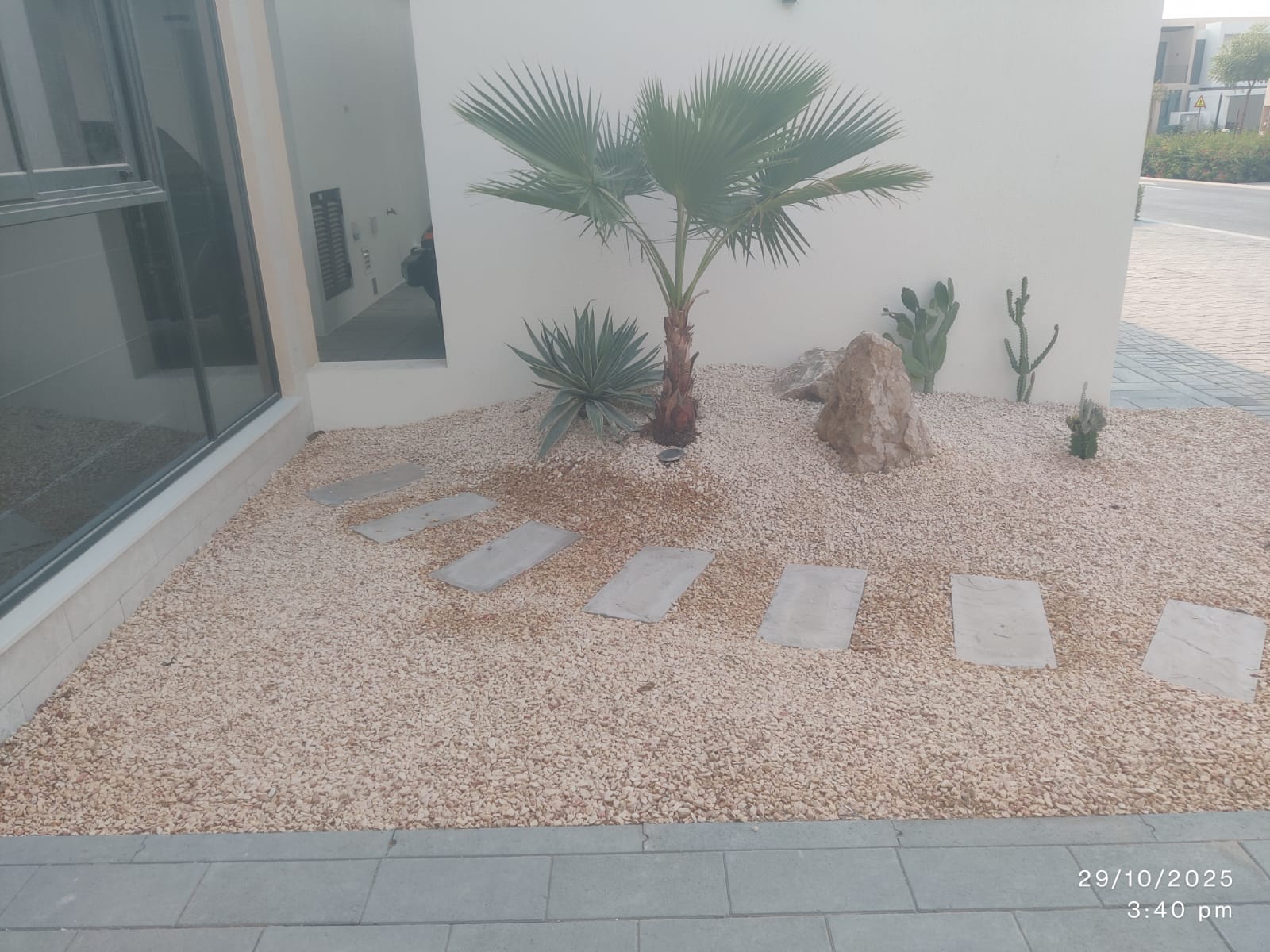
The most successful tropical-style villa gardens in Dubai tend to combine a small number of genuinely climate-appropriate feature plants — Bougainvillea, Plumeria, and Hibiscus chief among them — with decorative gravel, artificial grass, natural stone, and architectural hardscaping to fill out the space.
This creates the resort-style atmosphere homeowners want without relying on plants that require constant babying to survive.
Where a client specifically wants the fuller, denser tropical look that Areca Palm, Bird of Paradise, or Pandanus provide, the right approach is to identify a shaded or partially protected zone in the layout — beneath a pergola, along a north-facing wall, or within an enclosed courtyard — and design that pocket of the garden around those plants specifically, rather than scattering them through open, sun-exposed beds.
Maintaining Tropical Plants Dubai Gardens Through the Seasons
Maintenance considerations follow the same logic. True outdoor performers like Bougainvillea and Plumeria still need attention — an efficient irrigation system suited to the plant, soil, and season; sensible pruning to keep pathways and entrances clear; appropriate fertilization; and regular pest monitoring — but they do not fight the climate the way misplaced tropical foliage does.
Good soil preparation before planting, checking drainage, salinity, and soil structure, matters for every plant in the garden, but it cannot compensate for placing a shade-loving, humidity-dependent plant in full desert sun.
Finishing Touches for a Resort-Style Tropical Plants Dubai Garden
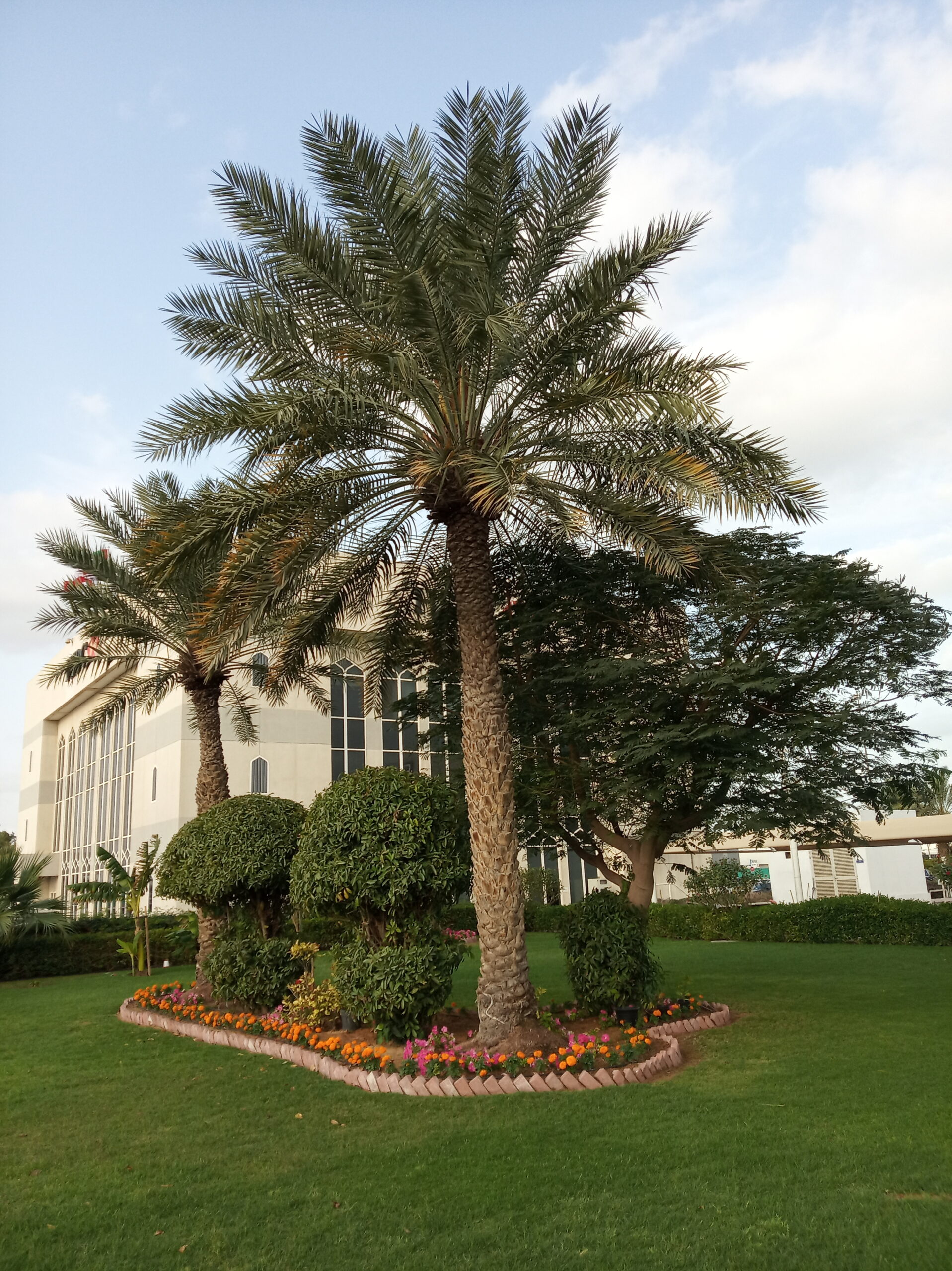
A modern, well-composed tropical villa garden in Dubai does not need to look wild or overcrowded, and it does not need to rely on plants unsuited to the climate to achieve a lush effect. Repeating a small number of proven outdoor performers creates visual consistency; clear bed edges using paving, kerbs, or gravel keep the design sharp; and a few structural, architectural plants — Agave or Yucca, for instance — can add contrast against the softer greenery.
Subtle landscape lighting on feature trees and large-format stepping stones through planting beds complete the resort-style effect. Colour pairings work well throughout: green foliage with white flowering plants such as Arabian Jasmine for a calm, elegant look; green with the pinks of Plumeria and Hibiscus; or green paired with beige or grey natural stone for a more contemporary, architectural feel.
Common Mistakes to Avoid With Tropical Plants Dubai Gardens
The most common mistakes in tropical villa landscaping in Dubai are planting too many different species at once, which makes a garden feel cluttered rather than lush; ignoring how large a plant will grow and failing to leave room for its mature size; and inconsistent irrigation, whether too little or too much.
Other frequent issues include poor drainage, which can damage roots even in plants that want regular moisture; planting too close to walls and boundaries without allowing space for growth and maintenance access; and leaning too heavily on lawn instead of balancing it with planting, paving, and gravel.
Avoiding these mistakes — and, most importantly, matching each plant to a spot in the garden it can actually thrive in — is what separates a Tropical Plants Dubai garden that looks good for one season from one that still looks good five years later.

Sourcing Tropical Plants Dubai Gardens Need, and Getting Expert Help
When sourcing plants and materials for a villa garden, it helps to work from a finalized planting design first, so quantities, sizes, spacing, and planter requirements are clear before anything is purchased.
Souq Garden is a useful resource in Dubai for outdoor plants, trees, pots, planters, soil, fertilizers, and other gardening supplies — always worth checking a plant’s sunlight requirements, watering needs, and mature size against where it will actually be planted before bringing it home.
For homeowners who would rather leave the planning to a professional, our own landscape design service can put together a complete Tropical Plants Dubai planting plan that balances genuine outdoor performers with a few well-placed shaded accents, so the garden looks resort-quality from the first season without fighting the climate.
Pairing Tropical Plants Dubai Gardens With the Right Irrigation
Even the most heat-tolerant Tropical Plants Dubai gardens still benefit from a properly zoned irrigation system rather than a single blanket watering schedule. Bougainvillea and Plumeria need comparatively infrequent, deep watering once established, while any shaded accent plants such as Areca Palm or Bird of Paradise need more consistent moisture and higher humidity around their root zone.
Grouping plants with similar water needs onto the same irrigation zone, rather than mixing drought-tolerant and moisture-loving species on one line, avoids the common problem of either underwatering the thirsty plants or drowning the drought-tolerant ones. A smart controller with separate zones for full-sun beds and shaded courtyard pockets makes this kind of tailored care realistic for a busy household to maintain.
Seasonal Care for Tropical Plants Dubai Villa Gardens
Tropical Plants Dubai gardens perform noticeably better when care is adjusted across the seasons rather than kept identical year-round. During the peak summer months, even outdoor-hardy plants like Bougainvillea and Hibiscus benefit from slightly increased watering frequency and a layer of mulch to protect roots from extreme soil temperatures.
In the cooler months from October through March, growth slows and watering can be reduced accordingly, while this window is also the best time to plant new specimens, prune spent growth, and refresh mulch before the next summer arrives. Matching maintenance effort to the season keeps a Tropical Plants Dubai garden looking consistently healthy rather than struggling through predictable seasonal stress points.
Frequently Asked Questions
Which Tropical Plants Dubai gardens can actually grow outdoors?
Bougainvillea, Plumeria, and Hibiscus are the most reliable genuinely outdoor-hardy choices, tolerating full Gulf sun and heat once established.
Can Areca Palm and Bird of Paradise be used in a Dubai garden?
Yes, but only in shaded or partially protected spots such as a pergola corner or courtyard wall — not in open, sun-exposed beds where they will scorch.
Why do some tropical-looking plants fail outdoors in Dubai?
Many tropical-look plants, such as ginger and broad-leafed foliage varieties, are naturally shade- and humidity-loving species that were never suited to direct desert sun, regardless of irrigation.
How much maintenance do Tropical Plants Dubai gardens need?
Genuine outdoor performers like Bougainvillea and Plumeria need routine irrigation, pruning, fertilization, and pest monitoring, but far less intervention than misplaced tropical foliage fighting the climate.
Can Sunscape Landscaping design a Tropical Plants Dubai garden?
Yes. Sunscape Landscaping designs and builds tropical-style villa gardens across the UAE using genuinely climate-appropriate plants and hardscape.