
Tropical Villa Garden Dubai: Building a Lush Luxury Landscape That Actually Survives
A well-planned Tropical Villa Garden Dubai design can turn an ordinary outdoor area into a lush, relaxing, resort-style retreat. The results depend entirely on choosing plants that can genuinely handle this climate rather than plants that simply look the part. Dubai’s intense sun, low humidity, and long summer heat mean that several plants commonly marketed for tropical outdoor gardens — including Areca Palm, Bird of Paradise, Pandanus, Bird’s Nest and similar broad-leafed foliage — are, in reality, indoor or heavily shaded courtyard plants.
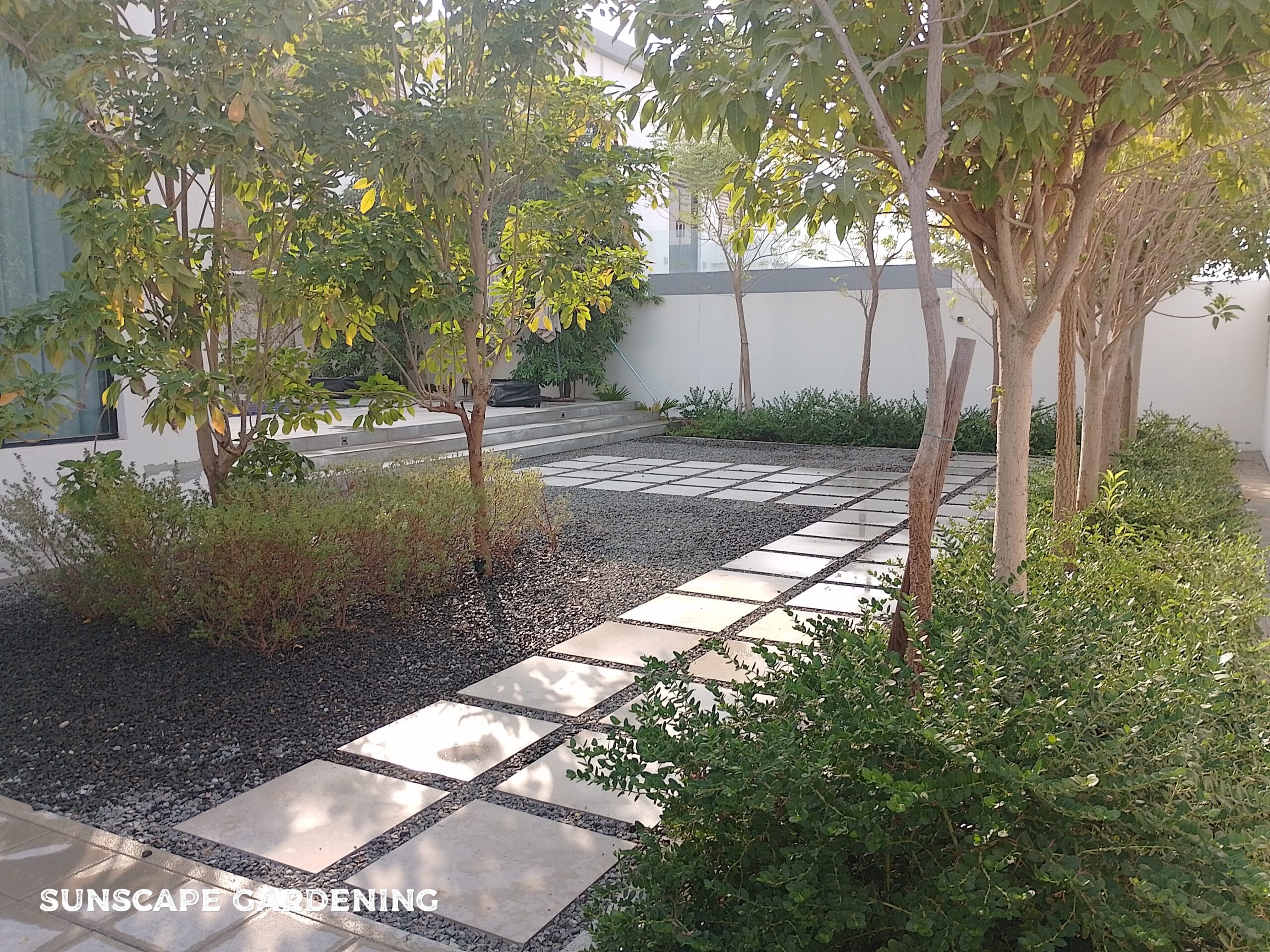
Placed in an open, sun-exposed villa garden, they struggle regardless of how well they are irrigated. A successful Tropical Villa Garden Dubai design combines genuinely heat-tolerant feature plants with layered hardscape — decorative gravel, artificial grass, natural stone, pathways, seating areas, and lighting — around entrances, pools, pergolas, patios, and boundary walls, rather than leaning on delicate foliage the climate cannot support outdoors.
Why a Tropical Villa Garden Works in Dubai — When the Plant Choices Are Right
A tropical garden creates a strong visual contrast with Dubai’s surrounding desert environment, and layered planting with the right species can make an outdoor area feel private, cool, and relaxing. A Tropical Villa Garden Dubai design can be scaled to any villa size — a small courtyard may need only a few carefully selected plants, while a larger garden can accommodate several planting layers and a genuine feature tree.
The point that matters most, and the one most tropical-style gardens in this region get wrong, is selecting plants for the actual site conditions rather than choosing them because they look tropical in a photo. A good landscape designer treats this as the starting point of the whole project, not an afterthought.
Best Plants for a Tropical Villa Garden in Dubai
For open, sun-exposed areas of a Dubai villa garden, Bougainvillea is one of the most dependable choices available. It tolerates full sun and heat with ease, needs relatively little water once established, and delivers strong, vivid colour along walls, fences, pergolas, arches, and trellises, while also softening hard architectural surfaces. It is also among the outdoor flowering plants Souq Garden lists as suitable for UAE gardens.
Plumeria is the other genuinely outdoor-hardy feature plant worth building a Tropical Villa Garden Dubai design around. Its sculptural branches and fragrant flowers make an excellent focal point near an entrance, patio, or poolside area, and a single mature specimen, placed in a clean bed surrounded by decorative gravel and low planting, can carry an entire section of the garden — landscape lighting after sunset only adds to the effect. Hibiscus, given consistent irrigation, also performs well outdoors here, contributing large, colourful flowers that contrast nicely against green foliage in beds, containers, borders, and along garden walls, though its flowering performance depends heavily on site conditions and ongoing care.
Areca Palm, Bird of Paradise, Pandanus, and Bird’s Nest-type tropical foliage are better reserved for partially shaded, sheltered pockets of the garden — a courtyard wall that only catches morning sun, a covered pergola corner, or an entrance alcove shielded from harsh afternoon exposure — rather than open beds. Used this way, they still deliver the dense, layered look that makes a tropical design feel like a resort, without the ongoing stress and replacement cost of fighting the climate in full sun.
Where a client wants a fuller jungle-inspired appearance from broad-leafed foliage, the right move is to design a specific shaded zone around those plants rather than scattering them through exposed beds. This is one of the most common corrections we make to a Tropical Villa Garden Dubai brief once the client understands the difference between an indoor tropical look and a genuinely outdoor-hardy one.
Layering, Entrances, Pools, and Pergolas
One of the real secrets to a convincing tropical landscape is layering rather than simply adding more plants. An upper layer of feature trees and tall, genuinely outdoor-hardy palms provides height and structure; a middle layer built around Hibiscus and Bougainvillea fills the space below; and a lower layer of groundcovers such as Liriope, Dianella, or Lantana completes the planting design and adds depth.
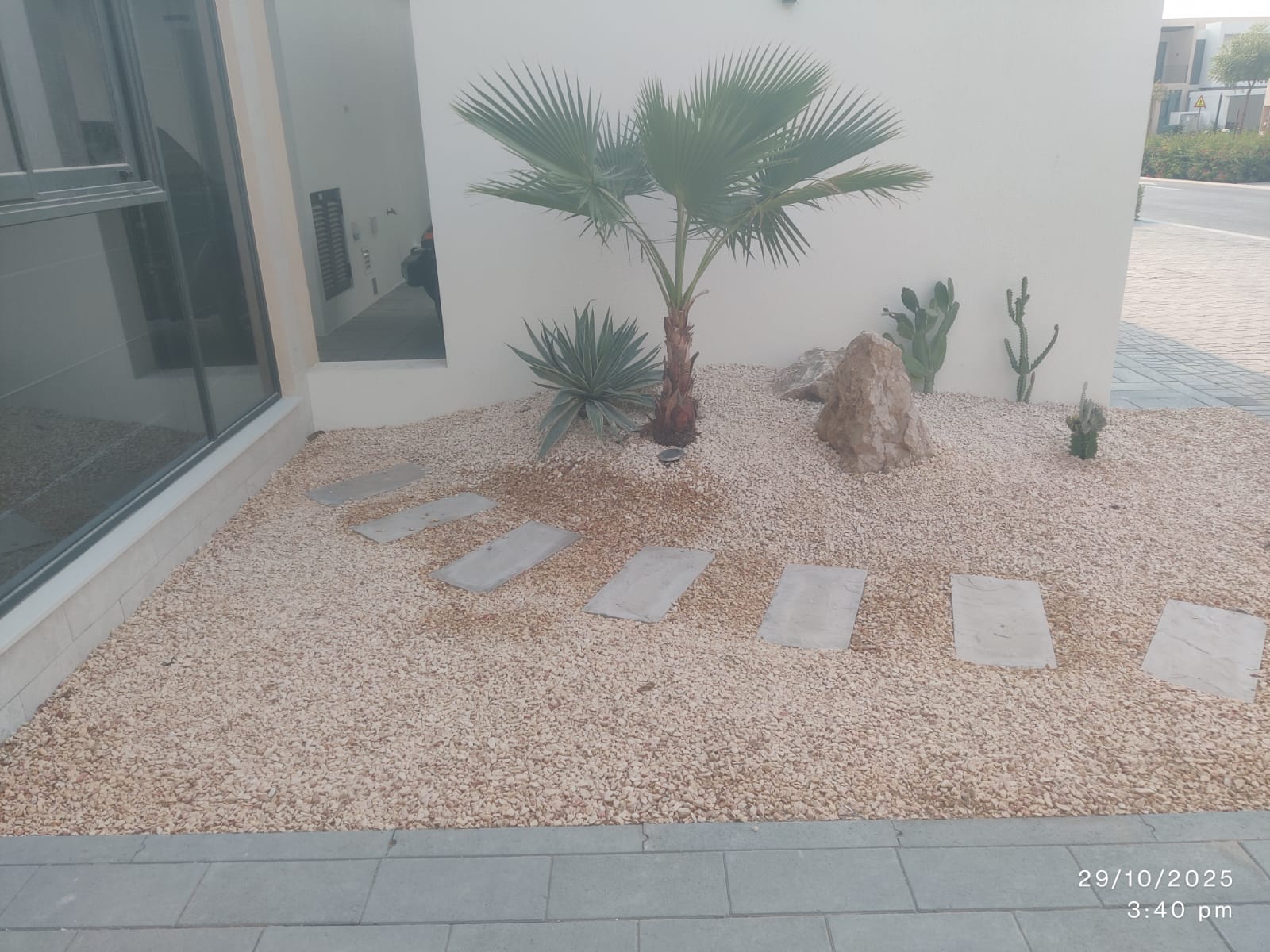
This layered structure works as well at a villa entrance — where a single Plumeria or hardy palm can serve as the focal point, framed by lower planting, decorative gravel, and stepping stones — as it does around a swimming pool, where the combination of water, a few well-placed outdoor-hardy plants, and clean hardscape creates a resort atmosphere without leaf and flower debris constantly falling into the water. Around a pergola, taller genuinely outdoor plants belong at the back, Hibiscus and other mid-height flowering plants in the middle, and low groundcover at the front, with Bougainvillea trained along the structure itself to introduce colour and vertical greenery.
A Tropical Villa Garden Dubai layout does not need to be covered entirely in lawn or dense planting to feel lush. Decorative gravel provides a clean, low-maintenance background for green foliage, and artificial grass can be used as one defined zone rather than across the whole plot, giving the garden several textures — a lawn section, a planting bed, a gravel pathway, and an outdoor seating area.
This reads as more visually interesting and is often the better choice for smaller villa gardens where both greenery and a clean, organised layout matter. A small garden can still achieve a genuine tropical feel with just one feature tree, two or three outdoor-hardy plant varieties, a couple of large planters, gravel, stepping stones, and simple lighting; open space is what makes a small garden feel larger, not filling every corner with plants.
For privacy along boundary walls, a combination of a genuinely outdoor-hardy palm with lower shrubs, properly spaced for mature growth and maintenance access, does the job without leaning on plants that will need constant replacement in full exposure. If you’d like a layout tailored to your own plot, our landscape design service starts with exactly this kind of site assessment.
Irrigation, Soil, and Ongoing Maintenance
Irrigation is particularly important for a lush Dubai landscape. Genuinely outdoor-hardy tropical plants like Bougainvillea, Plumeria, and Hibiscus still need a system designed around plant type, soil conditions, sun exposure, plant size, and seasonal requirements, with newly planted specimens needing extra attention while their root systems establish.
Good soil preparation before planting — assessing structure, drainage, organic matter, and salinity — supports every plant in the garden, but it cannot rescue a shade-loving plant placed in full desert sun. Ongoing maintenance follows the same logic as any well-run landscape: regular pruning to maintain shape and keep pathways clear, irrigation checks for blocked emitters or uneven watering, appropriate fertilization, routine pest monitoring, and removal of fallen leaves from pathways, seating areas, and pool surrounds.
Getting the plant selection right from the start means this maintenance keeps a Tropical Villa Garden Dubai design looking good rather than constantly fighting to keep struggling plants alive. The most common mistakes are using too many different species at once, ignoring how large a plant will grow, inconsistent irrigation, poor drainage, planting too close to walls and boundaries, and mixing too many hardscape materials. The single biggest mistake, though, is the one that started this article: choosing plants because they look tropical rather than because they can survive where they’re being planted.
Why Professional Planning Matters
Creating a tropical garden is more than buying tropical-looking plants. A professional Tropical Villa Garden Dubai project considers the entire outdoor space, from site measurement and concept design through plant selection, 2D and 3D planning, irrigation design, soil preparation, and the full hardscape package of gravel, artificial grass, stepping stones, planters, and lighting. That level of planning is what keeps a garden looking good as the plants mature rather than needing to be redone within a couple of seasons.
When sourcing plants and materials, Souq Garden carries a wide range of outdoor plants, palms, trees, shrubs, and garden supplies — worth checking against your garden’s actual sun exposure, irrigation setup, available space, and each plant’s mature size before finalizing a selection. Whether the project is a villa entrance, a poolside garden, a pergola area, or a private courtyard, the best tropical landscapes in Dubai are not the ones with the most plants — they are the ones using the right plants in the right locations, backed by attractive hardscape, efficient irrigation, subtle lighting, and practical planning.
Bringing a Tropical Villa Garden Dubai Design to Life
Turning a Tropical Villa Garden Dubai concept into a finished landscape happens in a few clear stages. It starts with a site walk to assess sun exposure, soil condition, and existing irrigation.
Next comes a planting plan that places each species where it can genuinely thrive, rather than simply where it looks best on paper. A Tropical Villa Garden Dubai layout works best when it is drawn up before any plants are purchased.
The hardscape comes before the planting. Pathways, gravel beds, lighting runs, and planter positions are marked out first, since adjusting hardscape around established plants later is disruptive and expensive.
A Tropical Villa Garden Dubai project that follows this order needs far less rework later on. Irrigation lines, drainage, and bed edges are planned around each plant’s mature size from day one.
Budget and timeline both benefit from this sequencing. A modest Tropical Villa Garden Dubai refresh — replacing struggling plants, adding gravel and lighting, and introducing two or three genuinely outdoor-hardy feature species — can often be completed within a week.
A full Tropical Villa Garden Dubai transformation involving new hardscape, irrigation redesign, and a complete planting scheme naturally takes longer to complete. The investment pays off over time.
A garden built this way still looks resort-ready years later, instead of needing constant replacement of plants that were never suited to the spot in the first place.
Getting a written quote that itemizes plants, hardscape, irrigation, and lighting separately makes it far easier to compare options. It also shows exactly where a Tropical Villa Garden Dubai budget is being spent, stage by stage.
Ongoing care matters just as much as the initial design. A Tropical Villa Garden Dubai landscape holds up best with a simple seasonal routine: adjusting irrigation timers between summer and winter, pruning spent growth, and checking drainage before the rainy season.
Frequently Asked Questions
What is a Tropical Villa Garden Dubai design?
A Tropical Villa Garden Dubai design combines genuinely climate-appropriate lush foliage, feature trees, pathways, planters, and hardscape elements to create a resort-style outdoor environment suited to a Dubai villa, rather than relying on plants that only look tropical.
Which plants are genuinely suitable for outdoor tropical planting in Dubai?
Bougainvillea, Plumeria, and Hibiscus are the most reliable genuinely outdoor-hardy choices for a Tropical Villa Garden Dubai design. Areca Palm, Bird of Paradise, Pandanus, and broad-leafed tropical foliage are better used as accents in shaded, sheltered spots rather than open, sun-exposed beds.
Can tropical plants be combined with artificial grass and gravel?
Yes. Tropical planting works well combined with artificial grass, decorative gravel, paving, and stepping stones as defined zones, giving a villa garden several textures without relying on a single high-maintenance lawn.
Do tropical villa gardens need more water than desert-style landscaping?
Genuinely outdoor tropical performers like Bougainvillea and established Plumeria need comparatively little water once settled in, while Hibiscus and other flowering plants need more consistent irrigation. Water needs vary significantly by species, location, season, and soil conditions.
Where can I buy the right plants for a tropical villa garden in Dubai?
Souq Garden offers a wide range of outdoor plants, palms, trees, shrubs, and garden supplies suited to UAE gardens — always check a plant’s sunlight requirements, watering needs, and mature size against where it will actually be planted.
